Historical Development of Visual Plate Guides
Understanding how nutrition educators simplified complex dietary guidance into accessible visual frameworks
Origins in Public Health Communication
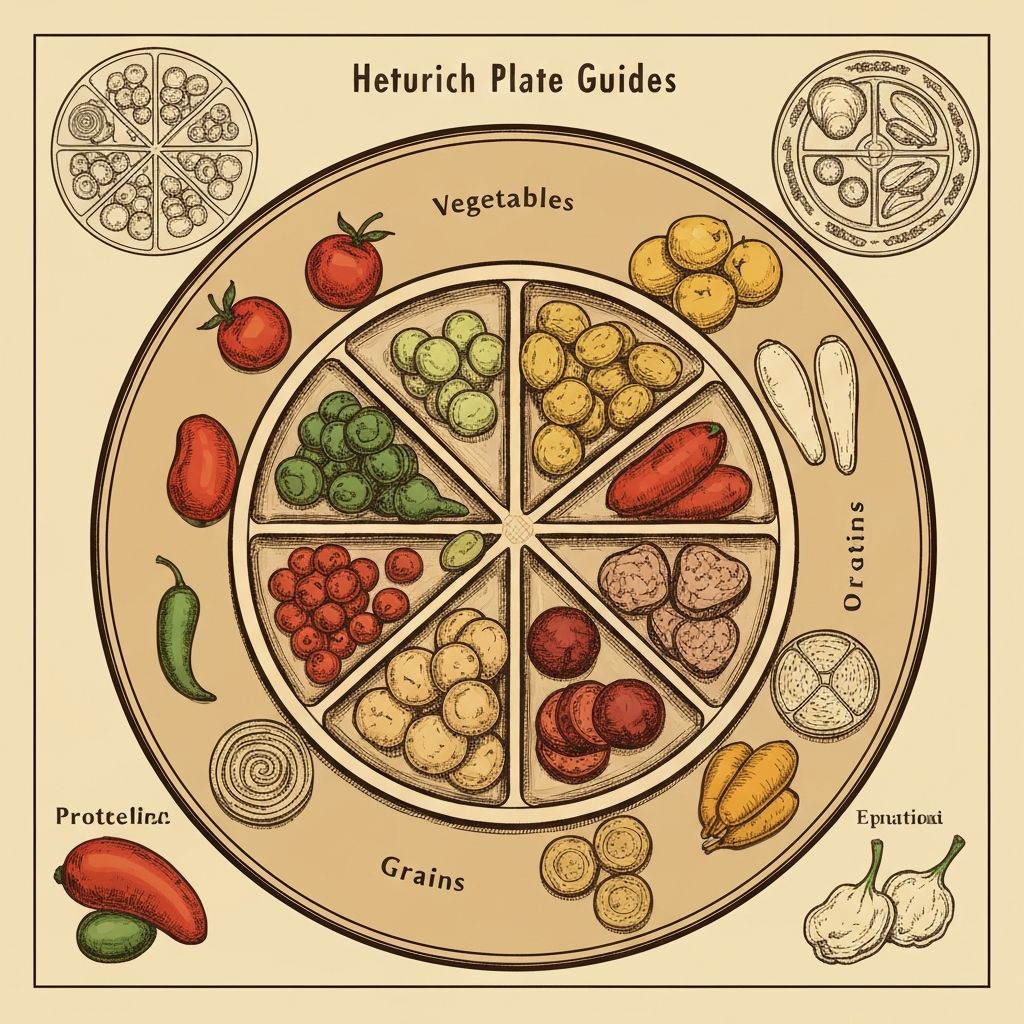
Visual plate-based eating guides emerged from public health campaigns seeking to communicate nutrition principles without requiring detailed scientific knowledge. Early nutrition educators recognized that visual representation could convey proportion concepts more effectively than printed guidelines or numerical calculations.
The transition from text-based recommendations to visual imagery represented a significant shift in nutrition communication strategy. Educators understood that people respond more readily to visual patterns than to paragraph-length nutritional guidance, especially across populations with varying literacy levels.
Evolution of Plate Division Systems
Early plate models divided foods into simple categories based on nutritional function. As nutritional science advanced, frameworks incorporated more detailed understanding of food group roles and nutrient contributions. Different eras of nutrition science reflected themselves in the proportion divisions and emphasis given to various components.
Mid-twentieth century models emphasized food groups as discrete categories with specific health functions. Later frameworks began integrating understanding of macronutrient ratios, micronutrient density, and food energy content into visual representations. This evolution occurred unevenly across countries, with different nations developing frameworks reflecting their specific health priorities.
National Adaptations and Cultural Influences
Rather than universal adoption of a single plate model, different countries developed frameworks reflecting local food cultures, dietary patterns, and health priorities. Nordic countries emphasized whole grain inclusion differently than Mediterranean regions. Asian nutrition frameworks incorporated rice and legumes with different proportional emphasis than Western models.
Cultural food traditions influenced which foods appeared in each section and what proportions seemed appropriate for local populations. Resources and food availability within different regions shaped recommendations. Health priorities—whether addressing nutrient deficiencies, chronic disease prevention, or sustainability—influenced how frameworks were structured and promoted.
Modern Framework Development
Contemporary plate models integrate scientific understanding from multiple research domains: nutritional biochemistry, epidemiology, food systems, and nutrition communication. Modern frameworks address not just nutrient adequacy but also disease prevention, environmental sustainability, and practical implementation across diverse populations.
Digital communication and visual design technology have enabled more sophisticated plate model presentations. Interactive versions allow exploration of variations. Multilingual frameworks serve diverse populations. Modern models explicitly acknowledge individual variation rather than presenting rigid universal standards.
Research on Visual Framework Effectiveness
Research examining plate model communication effectiveness generally finds that visual representations increase food selection consistency compared to text-based guidelines alone. Studies measuring dietary pattern quality among populations using plate frameworks typically show improvement in food group inclusion and nutrient intake.
However, effectiveness varies substantially based on supporting education, cultural appropriateness, and individual motivation. A visual framework alone doesn't ensure adherence; context, accessible examples, and practical implementation support significantly influence outcomes. Research continues examining which visual design elements communicate most effectively across different populations.
Explore More Nutrition Frameworks
Return to the main article to learn about specific component roles and nutrient contributions within balanced plate models.
Return to home